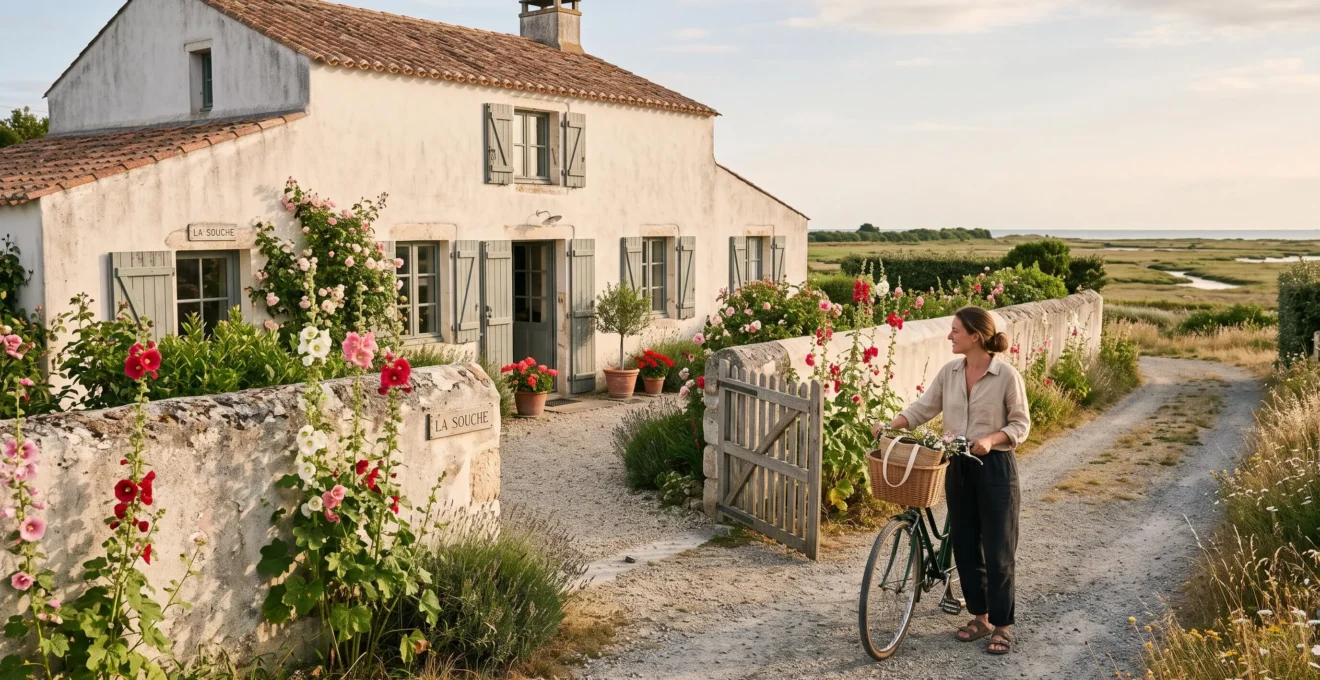
Staying in private villas on Île de Ré can feel like the most effortless way to enjoy the island: your own space, your own pace, and a base that’s as calm as the beaches and salt marshes can be. The hard part is knowing whether an offer is truly “exclusive” or simply dressed up as luxury.
The good news: you don’t need secret knowledge or price benchmarks to judge a villa’s real value. You need a clear set of criteria—location, privacy, finishing standards, and what’s actually included—so you can book without second-guessing.
Your decision grid for an exclusive villa stay on Île de Ré
- Start with your base: port energy and walkability vs salt-marsh quiet and space.
- Verify privacy in writing: garden enclosure, overlooked areas, and outdoor living layout.
- Check what “high-end” means: quality of fittings, bedding, climate comfort, and maintenance standards.
- Book around seasonality: the island’s atmosphere and availability shift sharply in summer.
- Separate essentials from options: housekeeping, concierge, chef, transfers may be add-ons, not guarantees.
What Makes a Private Villa Stay on Île de Ré Truly Exclusive?
Exclusivity on Île de Ré is best recognised by measurable comfort and privacy—plus a location that matches your pace—rather than by a label or a headline price. Before you compare offers, focus on what you can verify: how secluded the outdoor spaces are, how the home is finished and maintained, and how clear the host is about what’s included.
On the island, “villa” is often used broadly to describe a detached holiday home. That’s why a strong listing matters: it should explain the property’s layout, outdoor set-up, and rules clearly enough that you can picture daily life there—without filling gaps with assumptions.
Which criteria matter most for a truly exclusive villa?
Prioritise privacy, build quality, and outdoor liveability first; services come next. The fastest way to avoid overpaying is to judge “exclusivity” through practical, checkable features rather than vague adjectives.
- Privacy you can see (and confirm): enclosed garden, minimal overlooking, quiet access, and outdoor areas that don’t feel exposed.
- Finishing standards: consistent quality across bathrooms, kitchen, lighting, soundproofing, and storage (not just one “wow” room).
- Comfort in real conditions: shading, ventilation, heating for shoulder seasons, and maintenance responsiveness (pool/garden upkeep details should be explicit).
- Location fit: walk or cycle access to what you’ll actually use—market, beach, port, or salt marsh paths.
- Clarity on services: what is included (housekeeping, linen, welcome, support) vs what may be offered at extra cost.
How is a private villa different from a standard holiday rental?
A standard rental can be perfectly comfortable; an exclusive private villa is designed to remove friction. That usually shows up in the coherence of the space (flow, light, outdoor dining, storage), the reliability of equipment, and the precision of information you receive before paying.
Cas pratique
Imagine two options for the same week. Option A is a character house near the salt marshes: walled garden, outdoor dining sheltered from wind, and a layout that lets everyone spread out without feeling on top of each other. Option B is a standard village apartment: central and practical, but with shared entrances, less outdoor privacy, and limited storage for beach and cycling gear. The “exclusive” choice is not automatically the bigger one—it’s the one that protects your rhythm: quiet mornings, easy logistics, and private outdoor time.
Where can you check reliable villa listings and local guidance?
If you want a reference point that’s clearly identified as official, official self-catering villa listings Île de Ré are available via Destination Île de Ré (the island’s Tourist Office), which also mentions its reception desks across villages for on-the-ground help.
Choosing the Right Base: Ports, Villages and Coastal Zones
The “best” area is the one that matches your definition of luxury: lively harbour life within walking distance, or space and silence near marshes and dunes. On Île de Ré, distances can feel small on a map, but day-to-day experience changes quickly depending on crowd levels, cycling routes, and how close you are to what you’ll do most.
Think in terms of anchors: a port and village centre for atmosphere and dining, or a quieter zone for privacy, stargazing, and slow mornings in the garden. Then confirm practicalities: bike access, parking, and whether you can reach markets or beaches without getting in the car each time.
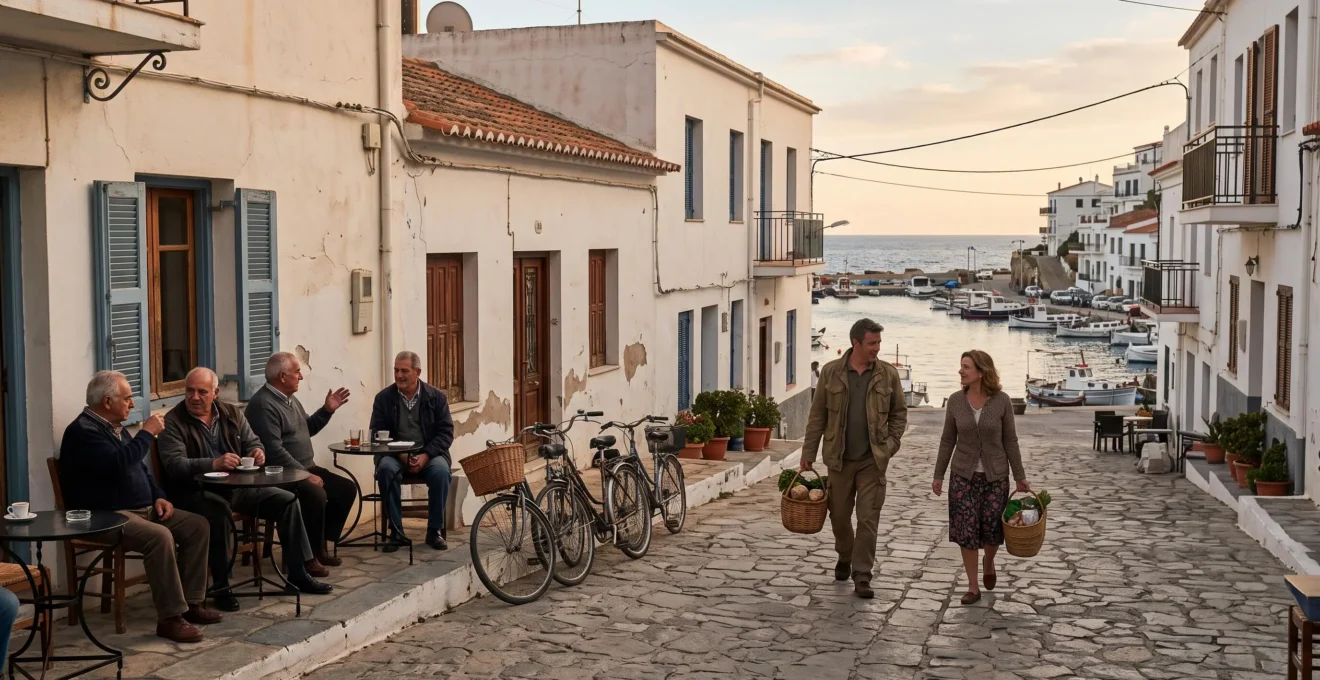
Saint-Martin-de-Ré or Ars-en-Ré for quiet luxury?
Choose Saint-Martin-de-Ré if you want port life, restaurants, and a “walk-out-the-door” holiday feel; choose Ars-en-Ré if your priority is a calmer village atmosphere with easy access to open landscapes. Both can support a high-end stay, but they don’t deliver the same daily rhythm.
To decide, picture one non-negotiable moment. If it’s an evening stroll to the harbour, browsing shops, or having more choices for dining without planning, Saint-Martin-de-Ré will feel simpler. If it’s reading by the pool, cycling through wide horizons, and returning to a quieter base, Ars-en-Ré tends to align better with that mindset.
Which zones suit space, privacy and nature-first stays?
Look toward salt-marsh landscapes, vineyard edges, and less central coastal stretches if outdoor privacy is your main luxury. These settings often make it easier to find villas with larger gardens, fewer direct neighbours, and a stronger sense of “escape”—as long as you accept that you may cycle further for ports and nightlife.
When comparing listings, don’t stop at the village name. Ask where the home sits within it: near a main road or tucked down a quiet lane; surrounded by walls and vegetation or exposed; close to cycling paths or dependent on driving.
Booking with Confidence: Seasonality, Availability and Practical Criteria
To book with confidence on Île de Ré, treat seasonality as your starting point: it changes the island’s atmosphere and can tighten availability—especially around summer. The best protection against disappointment is a methodical check of what you’re getting and what the booking terms truly say.
Demand does fluctuate across the tourist season. A 2024 season recap relayed by Ré à la Hune, citing Charentes Tourisme and Destination Île de Ré, notes that seasonal rental bookings increased between April and September 2024 versus 2023, with peaks in summer—useful context for why some weeks feel competitive on availability (seasonal rental trends Île de Ré 2024).

When should you book for high season on Île de Ré?
If you’re aiming for summer weeks, start your search early and be ready to decide once you find a good match. “Early” varies by property type and location, but the logic is consistent: the villas that combine privacy, walk/cycle convenience, and strong outdoor spaces are limited in number.
For more flexibility, consider shoulder-season timing for the same villa standards with a different island feel: quieter roads, more availability, and a slower pace. Whatever the season, you’ll still want clarity on heating, outdoor dining comfort, and what support is available if something needs attention.
What should you check before paying a deposit?
Check the essentials in writing: capacity, exact amenities, booking terms, and the “real-life” functioning of outdoor spaces. This is where you protect yourself from paying a premium for an experience that underdelivers.
- Confirm who the villa suits
Look beyond maximum occupancy: number of bedrooms and bathrooms, bed configurations, and whether spaces allow privacy for couples, kids, or friends.
- Verify the outdoor set-up
Ask about garden enclosure, overlooked areas, shade, outdoor dining, and how pool or garden maintenance is handled during your stay.
- Read the booking terms line by line
Cancellation conditions, security deposit rules, check-in/check-out windows, and what happens if an amenity is unavailable.
- Evaluate listing reliability
Prefer offers with clear, consistent descriptions and photos that show key areas (beds, bathrooms, terrace, access) rather than only “mood” angles.
- Clarify what’s included vs optional
Linen, towels, end-of-stay cleaning, mid-stay housekeeping, and concierge-style help should be explicit to avoid surprises.
Avoid opaque “luxury” language : if a listing won’t specify inclusions, rules, or key equipment, you can’t judge value—no matter how strong the photos are.
What Can You Expect from a High-End Island Experience?
A high-end villa experience on Île de Ré is typically defined by ease: the home works smoothly, and optional services can remove the last logistical friction. What you can expect depends on the property and provider, so the key is to separate what’s promised from what’s merely possible.
As context, accommodation plays a central role in the island’s tourism economy. Insee notes that tourism supported around 1,900 jobs on Île de Ré, with accommodation activities accounting for roughly 38 % of tourism-related employment—an indicator of how much the local visitor economy is structured around places to stay (Insee data tourism jobs Île de Ré).
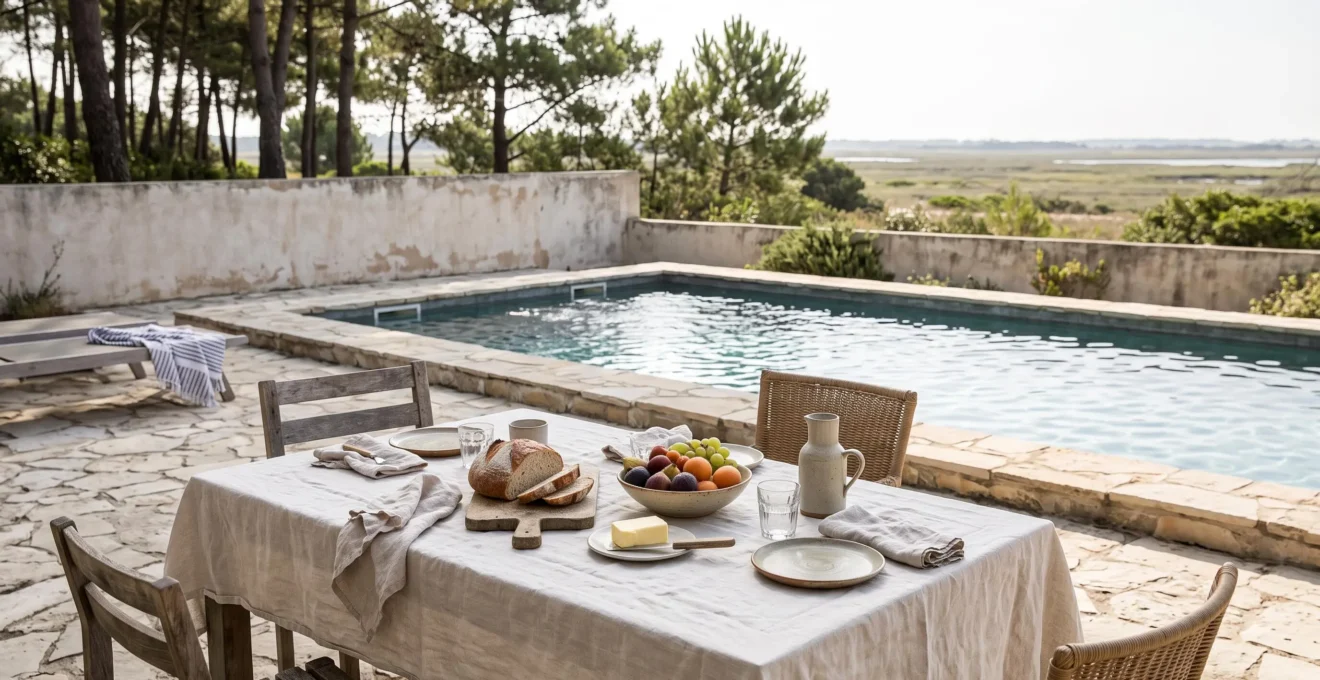
Which high-end services are common, and what is often optional?
Expect the essentials to be clearly defined, and treat “concierge” as a spectrum. Some villas include a baseline of support; others can arrange services on request. Either way, you should get a written list of what’s included.
- Often included (varies): linen and towels, a defined cleaning arrangement, local contact for issues, and check-in support.
- Often optional (on request): mid-stay housekeeping, private chef or catering, grocery pre-stocking, airport/train transfers, bike delivery, babysitting.
What premium experiences make sense on Île de Ré?
The most “premium” experiences are usually the simplest ones—made seamless. Think private or small-group activities that fit island life: cycling at the hours you prefer, market-driven meals, tastings, or time on the water when conditions are right.
If you’re comparing offers and wondering “is a private villa worth it?”, use this lens: you’re not paying for constant novelty, you’re paying for control—quiet when you want it, social time when you choose it, and a base that makes the island feel easy.
A realistic high-end day (hypothetical) to test if a villa fits
Picture a day where nothing needs troubleshooting: breakfast on the terrace, a cycle to the market, a long beach stop, then a calm return to a shaded garden. If that day requires too many “ifs” (parking chaos, no storage, exposed terrace, unclear pool rules), the villa may be attractive but not truly exclusive in use.
Planning Your Stay: A Simple Checklist Before You Book
Before you confirm a booking, you want one final pass that cross-checks zone, season, and villa criteria—so you can commit without doubt. Use the list below to validate value, not just aesthetics.
Decision tip: if two villas seem comparable, the one with clearer terms, better privacy evidence, and a more realistic location description is usually the safer “exclusive” choice.
| What you prioritise | Stronger fit | What to verify in the listing |
|---|---|---|
| Walkable evenings, dining choice, harbour atmosphere | Port-oriented village base | Noise exposure, parking approach, terrace privacy near centre |
| Space, silence, “reset” feeling | Quieter zones near open landscapes | Driving dependence, cycling access, nearby essentials (bakery/market) |
| Summer energy | Peak-season travel | Heat/shade, outdoor dining comfort, precise check-in/out rules |
| More breathing room | Shoulder seasons | Heating, maintenance support, reduced opening hours for some services |
Final pre-booking checklist (copy/paste)
- Location: does the exact setting match your rhythm (port life vs quiet lanes vs marsh edges)?
- Privacy: is the garden enclosed, and are terrace/pool areas overlooked?
- Comfort: bedding quality signals, ventilation/heating, storage, and indoor-outdoor flow.
- Clarity: inclusions vs options (cleaning, linen, support) stated in writing.
- Terms: cancellation, deposit, damage/security deposit handling, arrival/departure windows.
- Reliability: photos show the functional spaces (beds, bathrooms, terrace, access), not only “mood”.
- Timing: does the season you want match the atmosphere you expect?
If you want to explore the broader idea of what a “high-comfort” stay looks like across destinations, you can also read this internal piece on refined stays.
How do I know if a villa on Île de Ré is really worth the price?
A villa is “worth it” when you can verify the value drivers: privacy (walled garden, low overlooking), consistent finishing standards across the home, and a location that reduces daily friction (cycling access, proximity to what you’ll do most). If inclusions and terms are vague, you’re being asked to pay a premium without evidence—treat that as a red flag.
Which village or area should I base myself in?
Base yourself near a port-oriented village if you want walkable evenings and dining choice; choose quieter zones near open landscapes if your luxury is space and calm. The right choice is the one that matches your non-negotiable daily moment—harbour strolls or private outdoor time—then holds up to practical checks like cycling access and parking.
How far in advance should I book a private villa on Île de Ré in high season?
For summer weeks, start early and be prepared to move quickly once you find a villa that matches your criteria, because the most private, well-located homes are limited. Exact lead time varies by property and week, so your best strategy is to shortlist criteria first, then compare listings efficiently.
What should I check before booking a villa to avoid overpaying?
Check outdoor privacy (overlooking, enclosure, terrace set-up), comfort in real conditions (shade, ventilation/heating), and the booking terms (cancellation, deposits, what happens if an amenity is unavailable). Also ensure services are itemised as included or optional—“concierge” should never be assumed.
Once you’ve matched the right area to your pace and verified privacy, comfort, and terms in writing, choosing among private villas on Île de Ré becomes far less opaque. The goal isn’t to chase a “luxury” label—it’s to secure an island stay that feels effortless from the first morning to the last ride back from the market.